

Why You Keep Waking Up at 3 AM: The Complex Biological Sleep Mechanisms Explained
📋 Table of Contents
Quick Summary (Key Takeaways)
- Fatigue vs. Sleep Readiness: Physical exhaustion alone does not trigger deep sleep; complex biological sleep mechanisms must be in balance.
- The Two-Process Model: Sleep is regulated by Process C (Circadian Rhythm) and Process S (Adenosine accumulation).
- Vulnerable 3 AM Window: Light sleep transitions around 3–4 hours into rest make your brain susceptible to cortisol-driven awakenings.
- Beyond Melatonin Gummies: Fixing fragmented sleep requires supporting GABA pathway relaxation and autonomic nervous stability, not high-dose hormones.
Beyond Melatonin: Rethinking Human Sleep Mechanisms
Until I started reading clinical research papers and sleep science journals, I had an almost embarrassingly simple view of sleep: “If your body is tired, you sleep. If you can’t sleep, it’s probably just a melatonin deficiency.”
I’m pretty sure more than 90% of people think the exact same way. Search “can’t sleep” on Google right now and the word that jumps out first—and biggest—is melatonin. The ads make it sound like one gummy is all it takes for every sleep problem to magically disappear.
But the deeper I dug into neuroscience research and specialized journals, the clearer it became: I was completely wrong about human sleep mechanisms.
Sleep is not a simple switch you can just flip off when night falls. It’s a highly sophisticated physiological process that only works when multiple biological systems are perfectly synchronized.
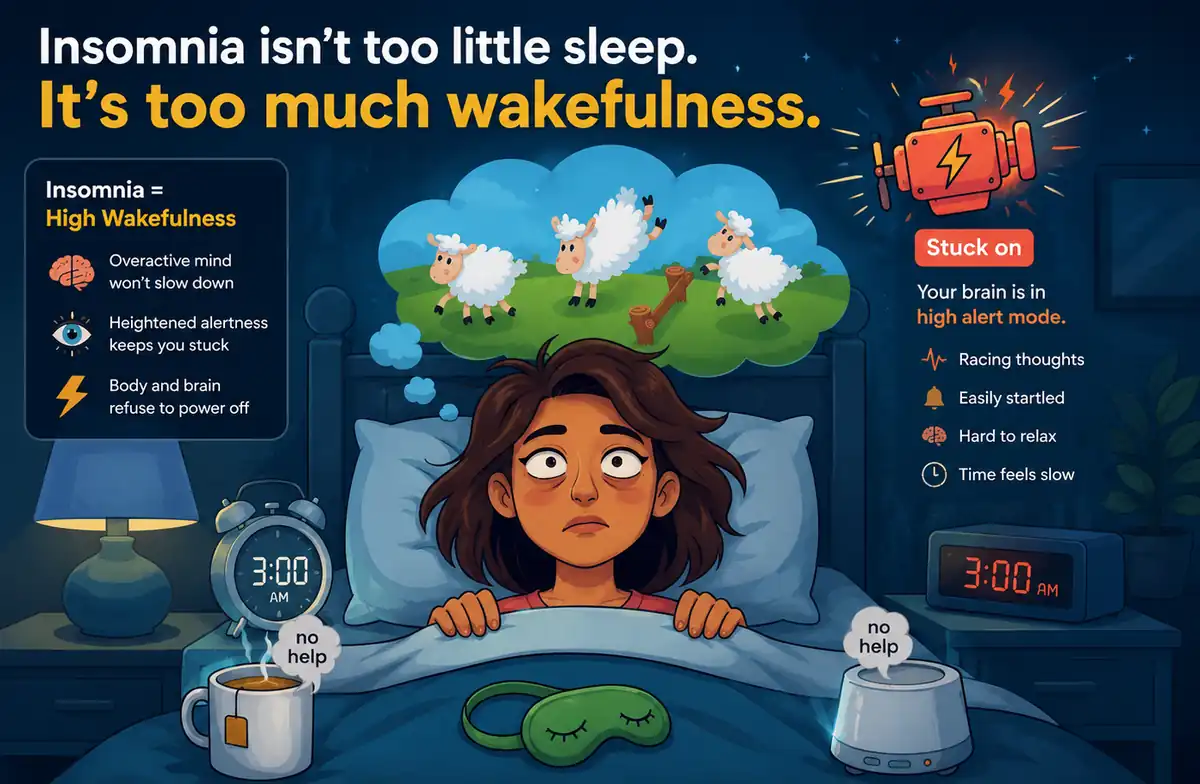
And the first fact that really surprised me was this: Being physically exhausted and being ready for deep sleep are two completely different things.
Why does your body feel wrecked, but your mind lights up the second you lie down?
We’ve all been there. After working 12+ hours, your muscles ache and your brain feels overloaded… yet the moment your head hits the pillow, it suddenly reboots like a supercomputer. When internal sleep mechanisms are dysregulated, fatigue alone cannot override a hyper-aroused central nervous system.
The Two-Process Model: Core Sleep Mechanisms at Play
Why does this disconnect happen? Your body regulates rest through specific sleep mechanisms known in neuroscience as the Two-Process Model:
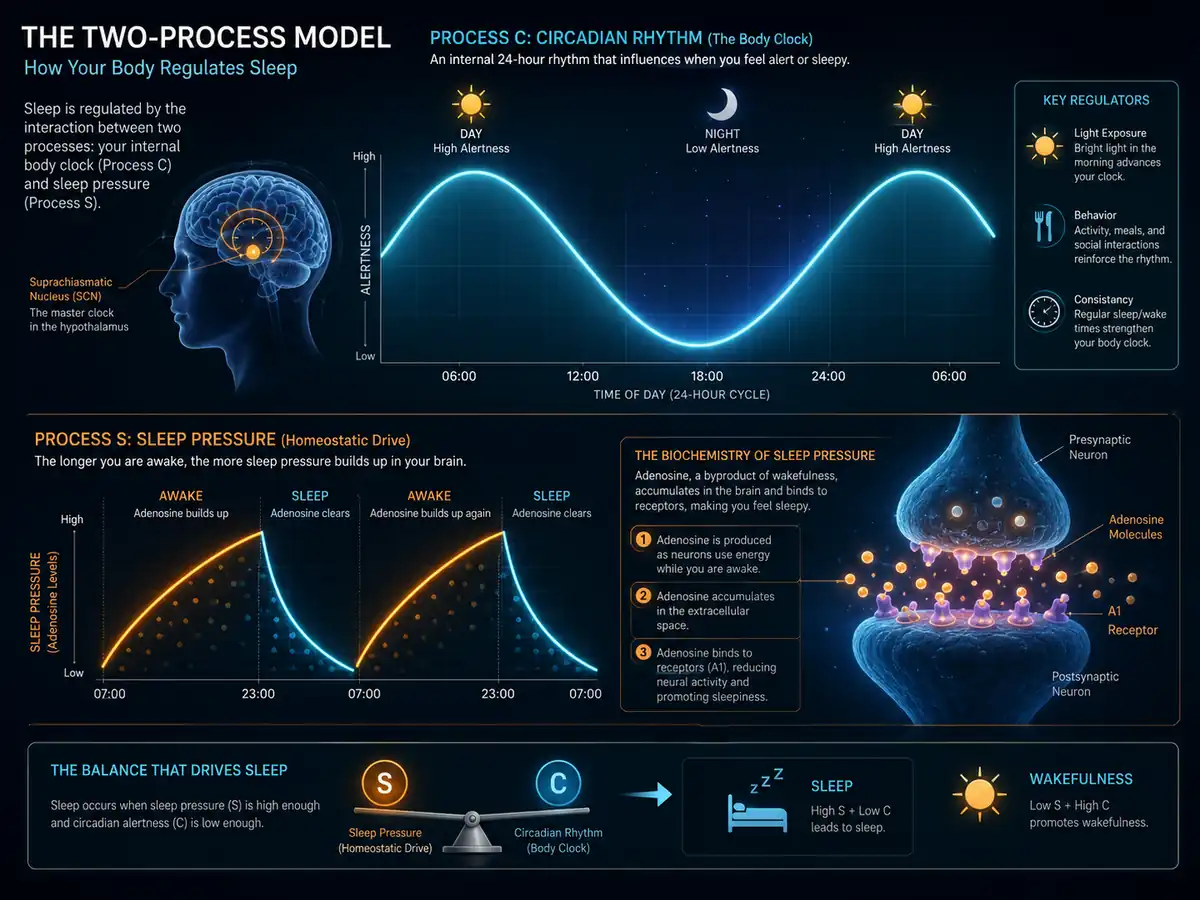
- Circadian Rhythm (Process C): This runs on roughly a 24-hour cycle and responds strongly to light. Morning sunlight prepares your body to wake up. Evening darkness triggers a small natural release of melatonin in the brain, signaling that it’s time to sleep. The master clock sits in the suprachiasmatic nucleus (SCN) of the hypothalamus.
- Sleep Pressure (Process S – Adenosine buildup): From the moment you open your eyes in the morning, a substance called adenosine starts accumulating in your brain. It’s a byproduct of your brain cells using energy while you’re awake. The longer you’re up, the more adenosine builds up. When it binds to A1 and A2A receptors, it suppresses arousal circuits and creates a powerful biological drive for deep sleep. This is also the main reason caffeine keeps you alert—it temporarily blocks these exact adenosine pathways.
When these core sleep mechanisms (Process S and Process C) are in perfect balance, falling asleep feels effortless. But if you fall asleep fine… why do you still wake up wide-eyed at 3 a.m.?
Inside Your Brain at 3 AM: Sleep Cycles & Structural Transitions
This was the part that gave me the biggest lightbulb moment regarding internal sleep mechanisms.
While we sleep, the brain is far from idle. It cycles through roughly 90–110-minute sleep stages several times a night (usually 4–6 cycles):
- Light Sleep (N1 & N2): The transition into rest. Easy to wake from small sounds or internal shifts.
- Deep Sleep (N3 / Slow-wave sleep): The core recovery stage. Growth hormone release, muscle repair, immune strengthening, and the brain’s waste-clearing process (the glymphatic system) mostly happen here. It’s concentrated in the first half of the night.
- REM Sleep: The dreaming stage. It helps process emotions and consolidate the day’s memories. REM periods get longer as the night goes on.
We cycle repeatedly through light sleep → deep sleep → REM → back to light sleep.
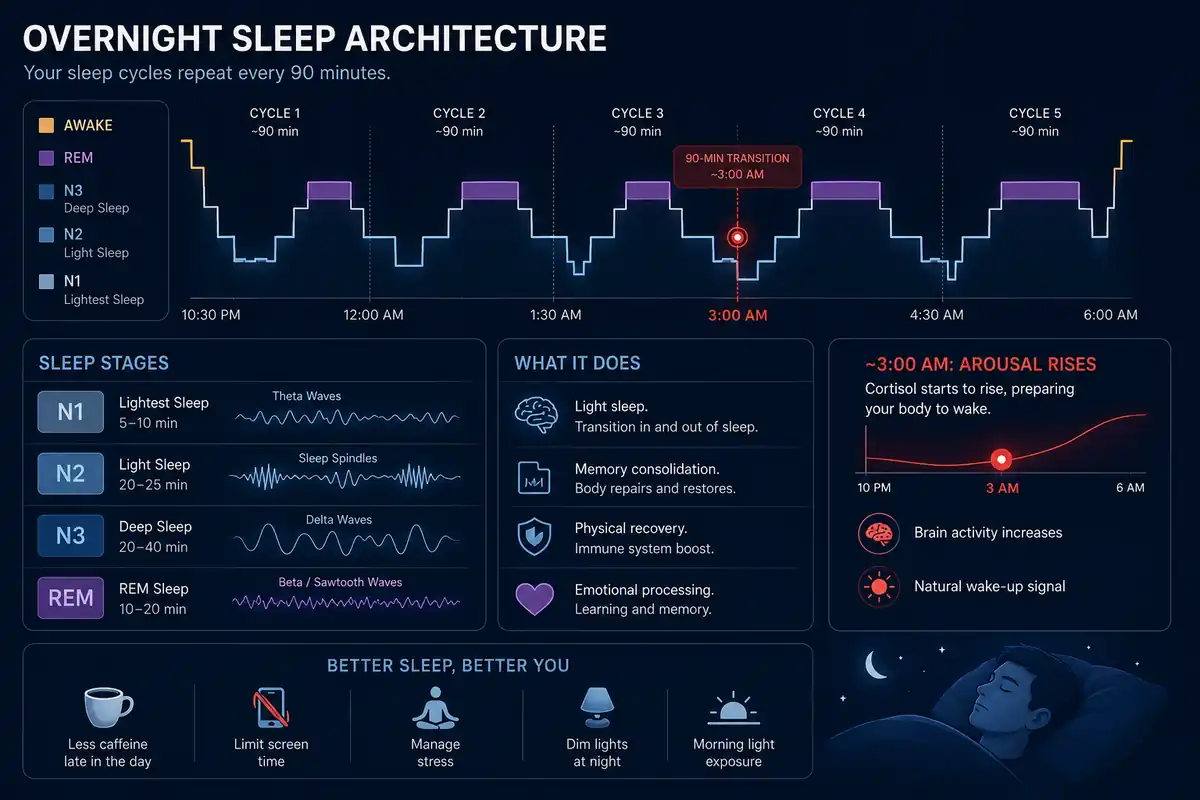
When I looked at my Oura Ring data, the problem became crystal clear. Around the 3–4 hour mark after falling asleep (often right around 3 a.m.), your body naturally passes through a lighter sleep stage as one cycle ends and the next begins. In a healthy system, underlying sleep mechanisms keep you gliding smoothly into the next deep phase.
But in my case, something was forcibly yanking my brain awake during that vulnerable window.
4 Hidden Causes Disrupting Your Nightly Sleep Mechanisms
Sleep scientists explain that middle-of-the-night awakenings rarely have a single cause. Instead, several physiological factors collide when key sleep mechanisms meet a light-sleep phase:
- 1. The Natural Rise in Cortisol (and Stress Amplification): Cortisol is lowest around midnight and begins rising between roughly 2–4 a.m. to prepare you for waking. This is normal. But when chronic daytime stress is present, that spike occurs too early and too sharply, jolting the brain awake.
- 2. An Overactive Autonomic Nervous System: The sympathetic “fight-or-flight” branch fails to fully power down, keeping heart rate and core body temperature elevated.
- 3. Blood Sugar Fluctuations from Late Eating: An overnight drop in glucose triggers compensatory adrenaline and cortisol surges.
- 4. Imbalances in the Adenosine Pathway: Late caffeine intake or fragmented sleep debt disrupts the natural clearance of adenosine pressure.
When these physiological stressors stack on top of a natural light-sleep cycle transition, your primary sleep mechanisms fail to maintain continuity, causing your eyes to snap wide open.
A Paradigm Shift: Balancing Biological Sleep Systems Naturally
That’s when it hit me. I had been trying to fix intricate biological sleep mechanisms with quick, one-dimensional solutions.
- “Just take high-dose melatonin?” → It only signals that it’s time to sleep. It doesn’t stop a 3 a.m. cortisol surge or help you stay in deep sleep.
- “Just push harder with exercise?” → It can actually drive nighttime stress hormones even higher if overdone.
Once I understood how fragile these cellular sleep mechanisms can be under stress, I completely changed my approach. Instead of searching for strong synthetic pills that force the brain into temporary unconsciousness, I began focusing on helping the entire neurological network find natural harmony.
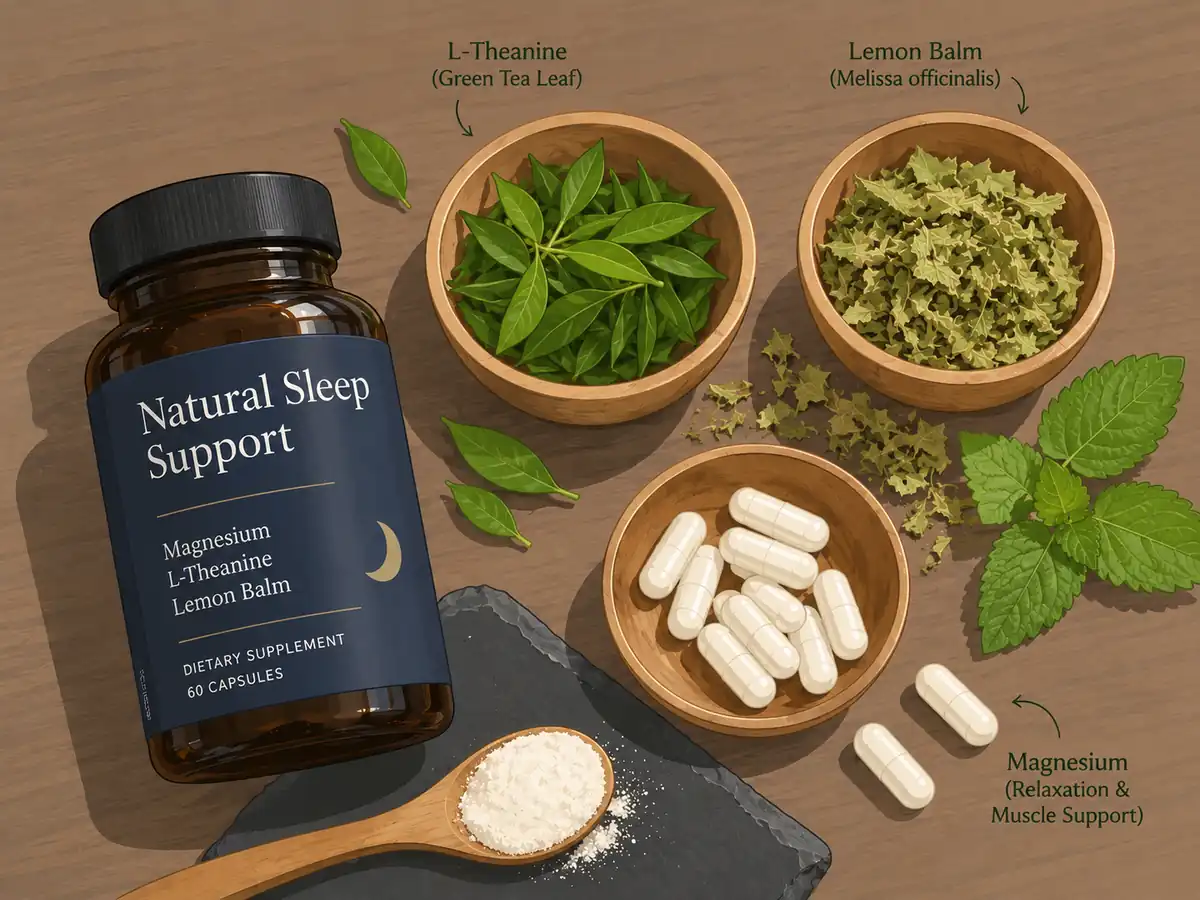
That’s why I began paying close attention to the natural compounds that sleep researchers and specialists frequently highlight—things like lemon balm (Melissa officinalis), L-theanine, magnesium glycinate, and apigenin. These support the brain’s calming GABA pathways, gently lower excessive nervous arousal, and directly aid deep muscle and system relaxation.
In the next section, I’ll break down the science behind how these key natural ingredients help quiet mental noise and keep you in deep sleep through the night—without the frustrating 3 a.m. wake-ups.