


What I Learned About Sleep Maintenance Insomnia
📋 Table of Contents
Quick Summary (Key Takeaways)
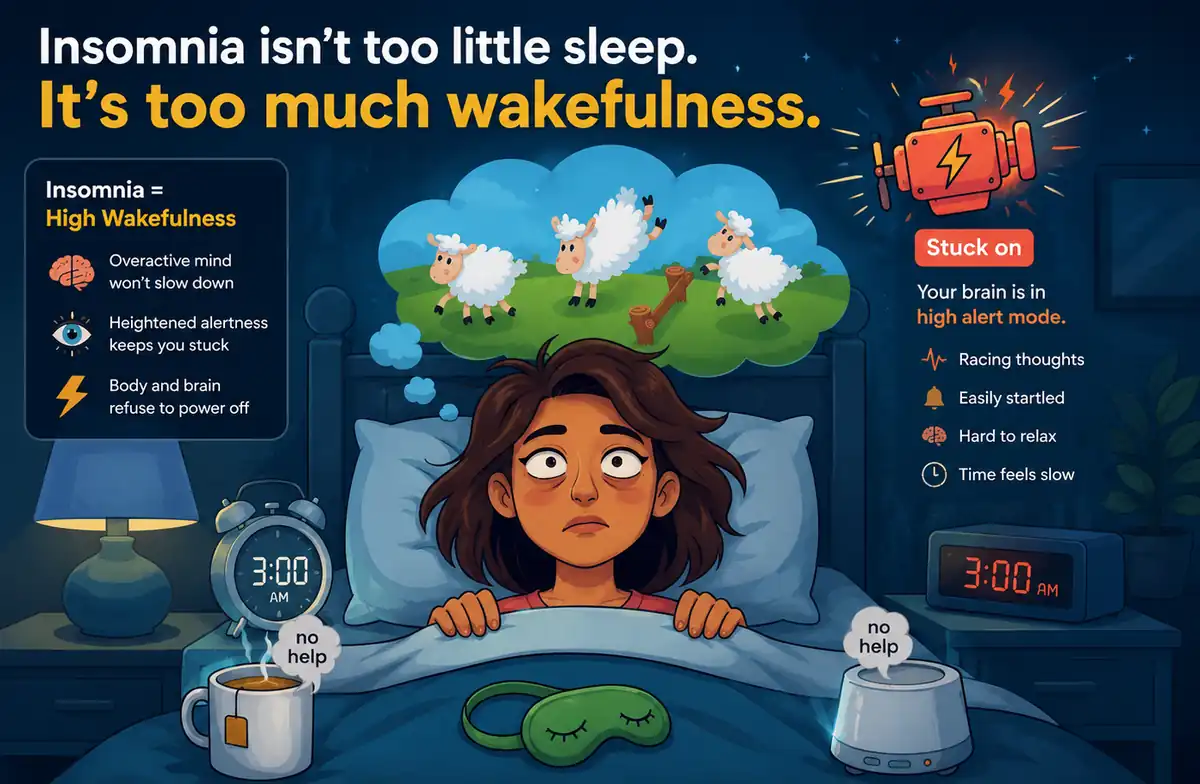
- Sleep Maintenance Insomnia: Frequently waking up at 3 AM is a distinct form of insomnia characterized by brain hyperarousal rather than simple tiredness.
- Beyond Melatonin: Staying asleep requires harmonic balance across cortisol rhythms, autonomic stability, and neurotransmitters—not just a single hormone.
- The Biological Switch: Shifts in sleep architecture during the early morning hours make the brain vulnerable to early awakenings when underlying stress or pressure is present.
Why You Might Be Waking Up at 3 AM Every Night
“It’s probably just stress.”
That’s what I kept telling myself.
Maybe it was the pressure of work deadlines. Maybe it was simply because I was getting older. At 48, I figured this was just one of those things that happened. After all, millions of people struggle with sleep these days. I assumed I was just another one of them.
But after a few weeks, I started noticing something strange.
Falling asleep wasn’t the problem.
Most nights, I’d climb into bed around 11 p.m. and be asleep within 10 or 20 minutes.
The real problem came later.
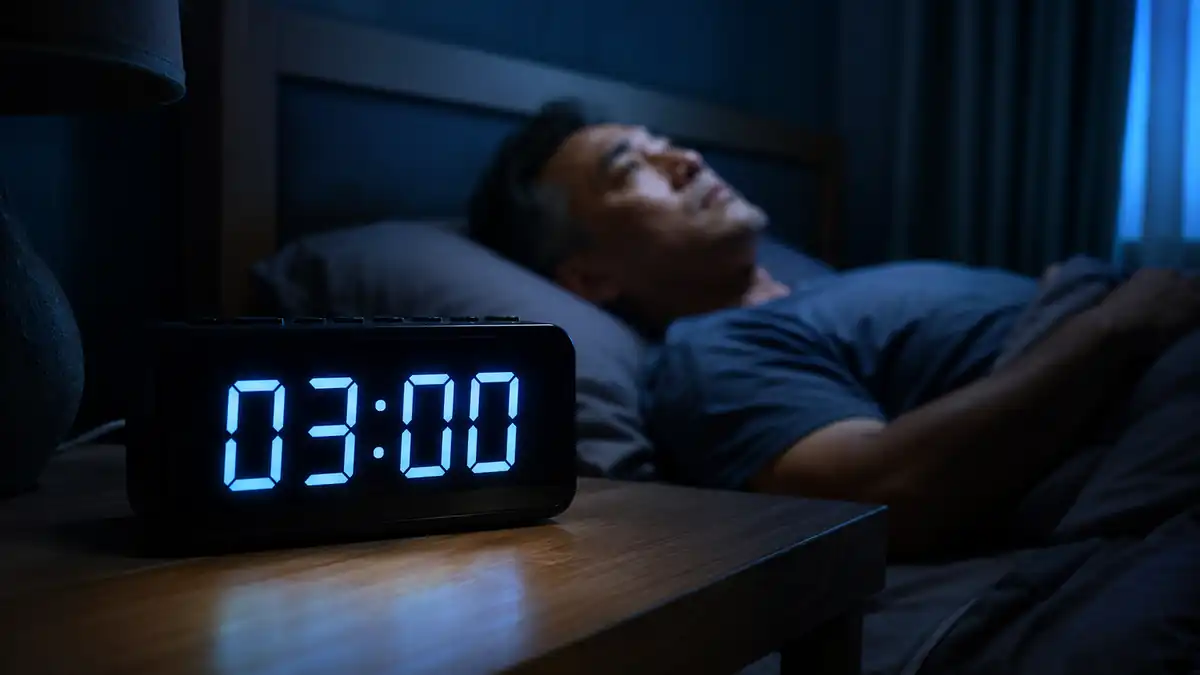
Somewhere between 2:00 and 3:00 in the morning—sometimes exactly 2:40, other nights 3:10—it felt as if an invisible alarm inside my brain had gone off. If you’ve ever experienced waking up at 3 am with your heart pounding or your mind racing, you know exactly how disorienting it feels.
- My eyes would suddenly open.
- I didn’t need to use the bathroom.
- There wasn’t a loud noise outside.
- I wasn’t having a nightmare.
I simply… woke up.
And from that moment on, falling back asleep felt impossible. My body was completely exhausted, but somehow my mind was more awake than it had been during my busiest work meetings.
Within seconds, my thoughts would begin racing: My daughter’s future college tuition. An email exchange with a client from two days earlier. Conversations I replayed in my head, wishing I had said something differently.
One hour passed. Then another.
Some nights I never fell back asleep at all. Even when I finally drifted off again, the morning alarm always felt like it came far too soon. I would wake up feeling as though I had never really slept.
The Toll of Chronic Nighttime Awakenings
The hardest part wasn’t simply being tired. Anyone can survive one bad night of sleep. But when it happens for weeks… then months… it slowly starts affecting every part of your life.
I woke up feeling drained. By two o’clock every afternoon, my concentration had completely disappeared. Another cup of coffee only made my heart race without giving me any real energy.
Exercise didn’t help. Sleeping in on weekends didn’t help.
Eventually, bedtime stopped feeling like a chance to rest. Instead, it became something I dreaded.
“What if I end up waking up at 3 am again tonight?”
Ironically, worrying about sleep made it even harder to sleep. It became a cycle that seemed impossible to break.
From Easy Sleeper to Chronic Insomniac
The strange thing is, I used to be the kind of person who couldn’t relate to people with insomnia. I’d always believed that if you worked hard enough during the day, you’d naturally sleep through the night. The moment my head hit the pillow, I was out. Deep sleep had never been something I needed to think about.
Then, almost overnight, everything changed.
At first, I assumed something was seriously wrong with me. Whenever I mentioned it to friends or coworkers, though, they all seemed to have an explanation:
- “Mark, that’s just part of getting older.”
- “You’ve been under too much stress lately.”
- “Try working out harder.”
- “Stop looking at your phone before bed.”
Honestly, none of that sounded unreasonable. So I tried almost everything. I stopped drinking coffee in the afternoon. I installed blackout curtains. I kept my phone on the other side of the room. I stuck to a strict bedtime schedule.
For a few days, things seemed slightly better.
Then one night, there I was again… Wide awake at 3:15 a.m., staring at the ceiling.
The Nighttime Research Rabbit Hole
That’s when I finally stopped and asked myself one simple question: Was I really the only one dealing with this?
That question sent me down a rabbit hole. I started reading sleep research late into the night. I watched interviews with neuroscientists and sleep specialists. I dug through medical journals and research papers.
And what I discovered surprised me.
Far more people struggle with staying asleep than I had ever realized. When most people think about insomnia, they imagine someone lying awake all night, unable to fall asleep. But medically speaking, waking up repeatedly during the night—or waking up much earlier than intended—is also considered a common form of insomnia.
Even more surprising… It isn’t rare at all.
What the Science Says:
Research suggests that roughly 30% of adults experience symptoms of insomnia, while around 10% to 15% struggle with chronic sleep maintenance problems or fragmented sleep.
For the first time, I realized I wasn’t alone. Oddly enough, that was comforting.
But it also raised an even bigger question: Why do so many people report waking up at 3 am at almost exactly the same time every night? And if millions of people are dealing with this problem… Why does there still seem to be no simple solution?
Why Melatonin Isn’t the Whole Answer
At first, I assumed the answer was obvious: Melatonin.
That’s what every advertisement seemed to suggest. “Can’t sleep? Take melatonin.” Simple. Or so I thought.
The deeper I dug into the research, the more I realized how incomplete that explanation really was. Sleep isn’t controlled by a single hormone. Every night, your body relies on an incredibly complex system working together:
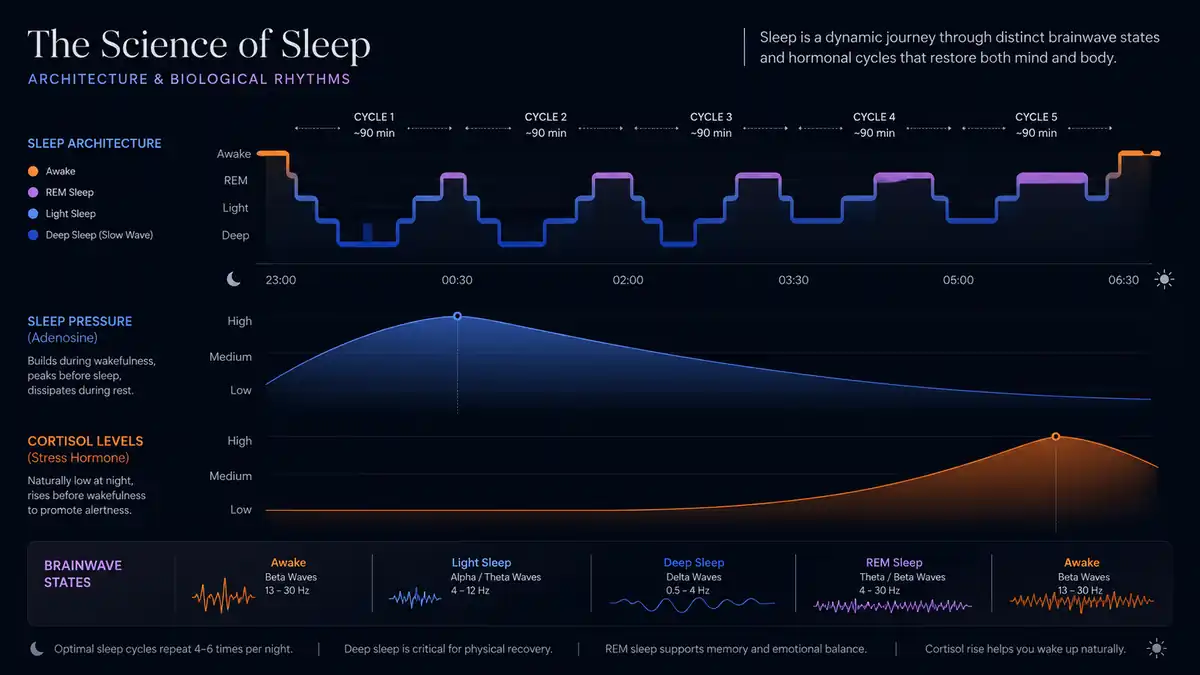
The 5 Core Components of Sleep Architecture:
- Cortisol Dynamics: Natural fluctuations in stress hormones.
- Autonomic Balance: The equilibrium of your nervous system.
- Sleep Stage Transitions: Smooth progression between deep sleep and REM sleep.
- Neurotransmitter Activity: Key chemical signals firing inside the brain.
- Sleep Pressure: The biological drive to sleep that builds throughout the day.
Melatonin, I discovered, is only one small piece of a much larger puzzle. Study after study pointed toward the same conclusion: Restorative sleep happens when multiple biological systems are working in harmony—not when a single hormone is increased.
A Shift in Perspective
That realization completely changed the question I was asking.
Instead of wondering, “What’s the next sleep supplement I should try?” I found myself asking something much more fundamental:
“How does the body actually stay asleep… and what causes that system to suddenly switch off at 3 a.m.?”
🌐 Reference Sites & Medical Authorities: