









Why Diet and Exercise Alone Can’t Clear Metabolic Roadblocks — And What Actually Moves the Needle
📋 Table of Contents
Quick Summary (Key Takeaways)
- Surface vs. System: Standard diet and exercise improve the conditions for fat loss but rarely clear the deeper metabolic roadblocks that keep the scale stuck.
- Metabolic Efficiency Gap: Even consistent calorie control and training can stall when liver function, ceramide accumulation, and metabolic speed/efficiency remain out of balance.
- Synergy Over Single Fixes: Sustainable progress usually requires supporting multiple pathways at once rather than relying on willpower or one isolated change.
The Predictable Cycle of Weight-Loss Frustration
The most reassuring discovery I made while researching stubborn weight issues was simple: I was not the only one stuck in the same exhausting loop.
Almost everyone who struggles with persistent fat loss follows a nearly identical path. It feels personal when you are living it, yet the pattern is remarkably consistent.
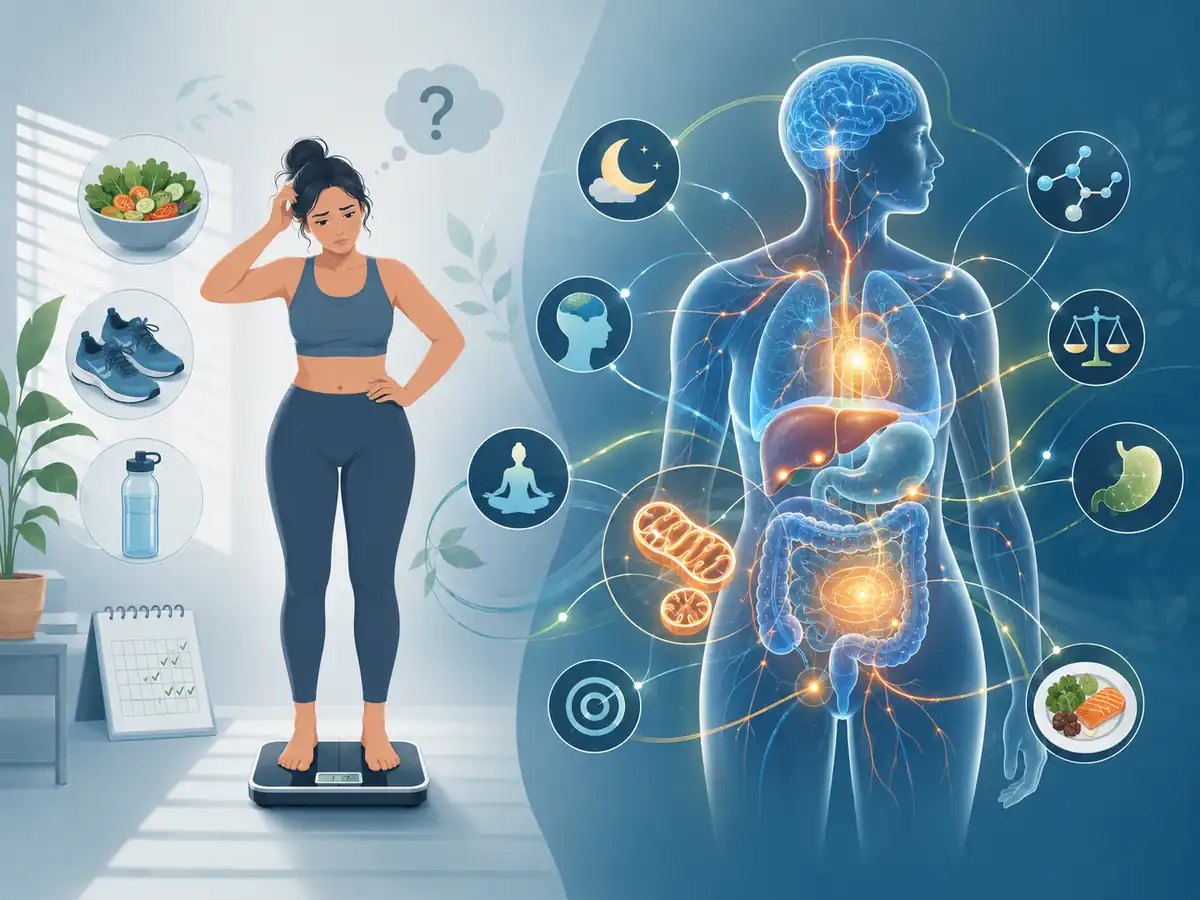
You start with good intentions. You cut calories. You add workouts. Results appear for a few weeks, then plateau. Motivation drops. The cycle restarts with a new plan. After enough rounds, many people begin to believe the problem is willpower. In reality, the deeper issue is often unaddressed metabolic roadblocks.

Stage 1: The “Just Eat Less and Move More” Phase
The moment you mention difficulty losing weight, the first advice is almost always the same:
“Have you tried eating less and moving more?”
It sounds logical. It is also incomplete. I treated the advice seriously and cleaned up the basics one by one.
I tracked calories carefully. I reduced late-night snacking. I added consistent strength training and daily walks. My energy improved somewhat and my clothes fit a little better for a short period. Then the scale stopped moving.
That experience is common. Diet and exercise create better surface conditions, yet they frequently leave the underlying metabolic roadblocks untouched. When the body’s fat-shuttling machinery and liver function remain compromised, additional effort produces diminishing returns.
Why Diet and Exercise Alone Can’t Clear Metabolic Roadblocks
This is the realization that changed how I approached the problem.
Diet and exercise are necessary foundations. They are rarely sufficient on their own when metabolic roadblocks are present. Understanding why diet and exercise alone can’t clear metabolic roadblocks reframes the entire conversation.
You can create a calorie deficit and still face stalled fat oxidation if ceramides and related compounds are interfering with liver function. You can train regularly and still experience low metabolic efficiency if the pathways that move stored fat into cellular furnaces are sluggish. In these cases the body continues prioritizing storage over burn, even when the person is doing “everything right.”
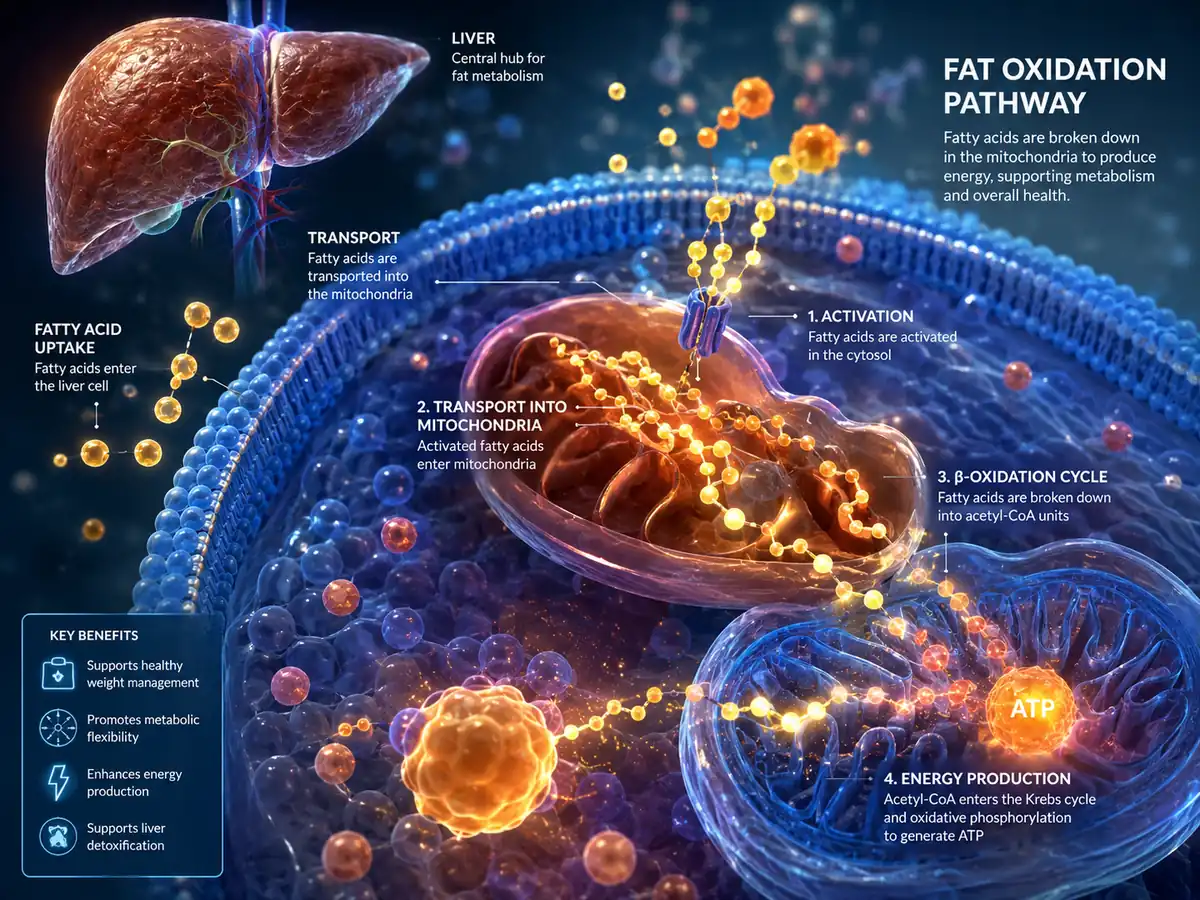
Many people discover that cleaning up habits improves how they feel during the day yet leaves the stubborn fat and afternoon energy crashes largely unchanged. That gap is the clearest signal that metabolic roadblocks, not lack of discipline, are the limiting factor.
Stage 2: Getting Lost in the Supplement Aisle
When better habits stopped producing progress, I did what most people do next — I started researching supplements.
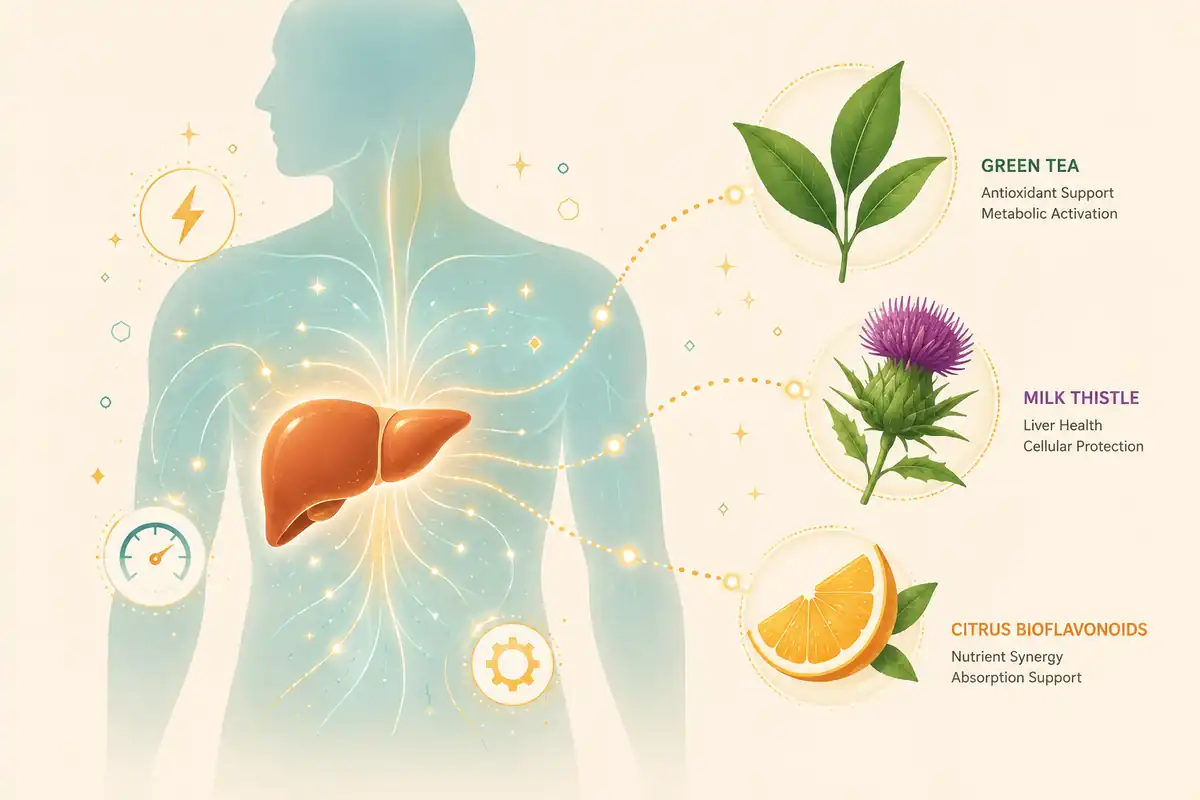
The market is noisy. After comparing labels and studies, the same categories kept appearing: green-tea extracts (EGCG), milk thistle (silymarin), resveratrol, fucoxanthin, black-pepper extract (Bioperine), and various antioxidants. Some formulas focused on liver support and ceramide-related pathways. Others emphasized morning metabolic activation that could pair with an existing coffee habit.
One question stood out: Why do the more thoughtful formulas combine several compounds instead of relying on a single high-dose ingredient? The answer lies in biological synergy.
The Biological Synergy Required to Clear Metabolic Roadblocks
Sleep research taught me that restorative rest functions like an orchestra. The same principle applies to metabolism.
Melatonin alone does not keep someone asleep through the night. In the same way, a single herb or calorie cut rarely clears metabolic roadblocks. Different compounds address different parts of the system:
- Liver Cell Integrity: Compounds that support liver cell health help the body’s primary fat-processing organ function more effectively.
- Thermogenesis & Fat-Cell Formation: Ingredients that influence fat-cell dynamics improve the overall efficiency side of metabolism.
- Nutrient Absorption: Agents that enhance nutrient absorption and reduce oxidative stress create a cleaner internal environment for fat oxidation.
Address only one piece and leave the rest alone, and the original metabolic roadblocks usually remain. This complexity is exactly why diet and exercise alone struggle when cellular and organ-level issues stay unaddressed.
Real, consistent progress typically requires supporting the system as a whole rather than flipping a single switch.

Two Distinct Paths Forward
Once the research is examined carefully, two practical non-prescription approaches stand out. They target the same internal obstacles from different angles.
Approach A: Targeted Liver & Ceramide Support (Example: Ikaria Lean Belly Juice)
This style of formula focuses on the hidden biological bottlenecks discussed earlier — ceramides, liver load, and the resulting slowdown in fat oxidation. It typically combines fucoxanthin, milk thistle, EGCG, resveratrol, Bioperine, and a blend of antioxidant extracts. The practical routine is simple: mix one scoop into water or a morning beverage. The goal is to support the organ most responsible for processing fat while helping the body manage compounds that encourage fat storage around vital organs.
This path tends to suit people whose main issues include stubborn midsection fat, low daytime energy, and a sense that their metabolism has slowed despite reasonable habits.
Approach B: Morning Coffee Metabolic Activation (Example: Java Burn)
This approach works with an existing daily habit. A tasteless, rapidly dissolving formula is added to morning coffee. It is designed to increase both the speed and efficiency of metabolism throughout the day by supporting the pathways that move calories and stored fat into active burn. Because it pairs with coffee, absorption and consistency are high for people who already drink coffee every morning.
This path tends to suit people who want a frictionless addition to their current routine and whose primary goal is elevating daily metabolic output rather than focusing first on liver-specific support.
Neither approach replaces foundational habits. Both are designed to address the internal obstacles that diet and exercise alone frequently leave in place. The better match depends on whether the dominant issue feels more like liver-related sluggishness and ceramide accumulation, or a general need to raise metabolic speed and efficiency within an existing coffee ritual.
I did not begin this research looking for another product. I was trying to understand why sensible effort kept producing limited results. The answer that kept appearing was the same: surface changes are not enough when internal obstacles remain active underneath.
Clearing those obstacles requires supporting the systems that actually govern fat oxidation and energy use. Diet and exercise create the conditions. Targeted nutritional synergy helps the body use those conditions more effectively.
Sustainable weight management is less about fighting your biology and more about removing the internal obstacles that keep it working against you. Once those mechanisms are aligned, the same habits that previously felt ineffective often start producing clearer results.
I hope mapping the pattern helps you evaluate the next step with clearer eyes.
Wishing you steady energy and measurable progress.
🌐 Reference Sites & Scientific Authorities:
- Seaweed to tackle rising tide of obesity – Newcastle University
- Effects of probiotics on gut microbiota: mechanisms of intestinal immunomodulation and neuromodulation. Peera Hemarajata, James Versalovic – Therap Adv Gastroenterol
- A meta-analysis of probiotic efficacy for gastrointestinal diseases. Marina L Ritchie, Tamara N Romanuk