








Understanding Sleep Maintenance Insomnia: Why You Keep Waking Up at 3 AM Every Night
Why Do I Keep Automatically Waking Up at 3 AM Every Night?
Have you ever experienced climbing into bed around 11 PM, falling asleep peacefully, but then finding yourself suddenly wide awake between 2:00 AM and 3:00 AM?
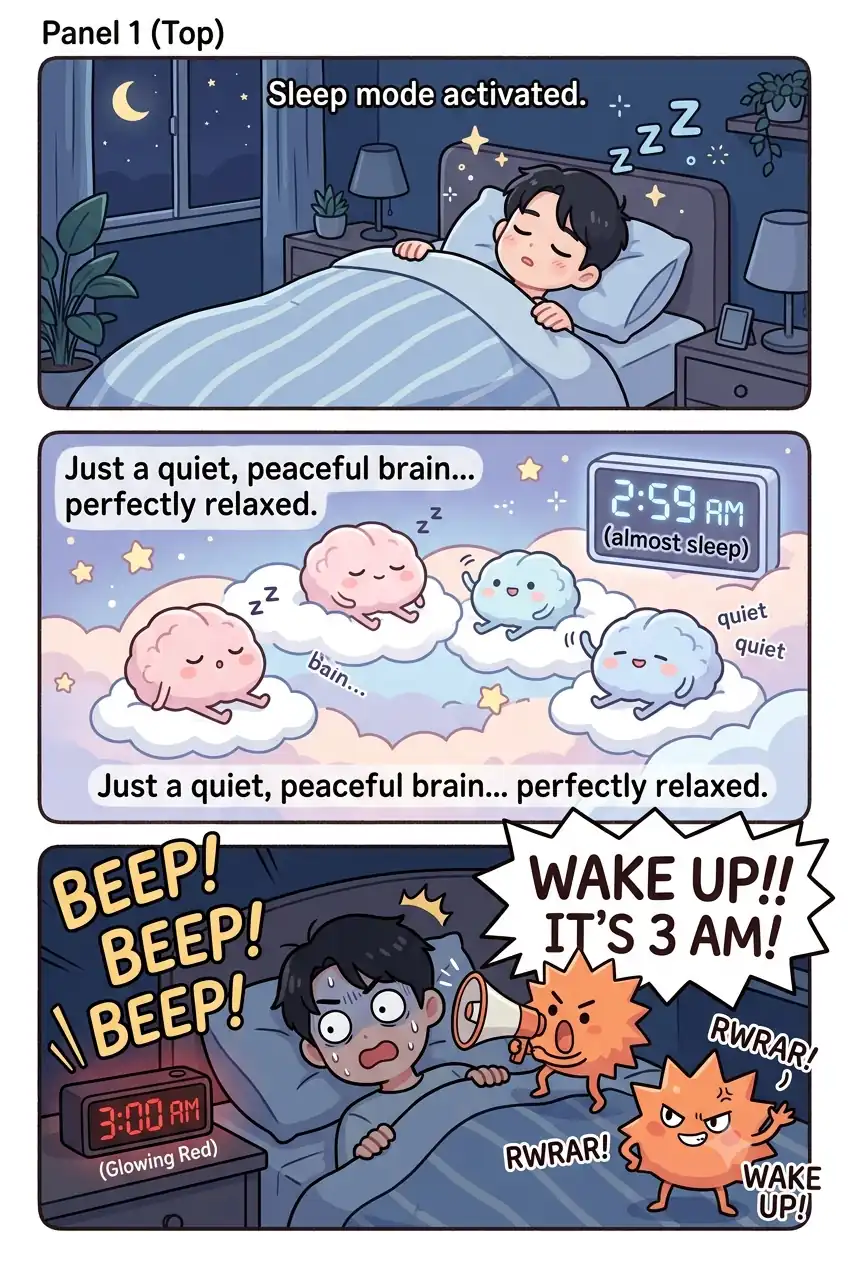
You don’t need to use the bathroom, there’s no noise outside, yet your glowing digital clock reads exactly ‘3:00 AM’.
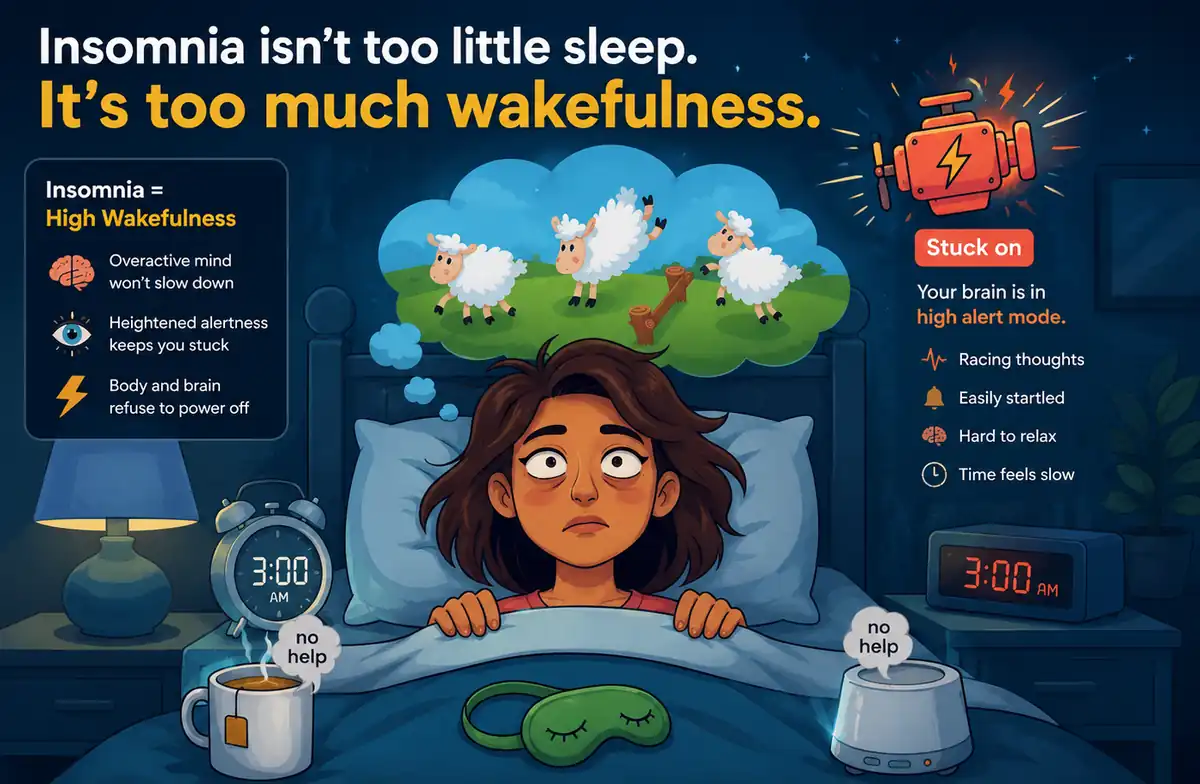
This isn’t just a coincidence. In sleep medicine, this condition is known as sleep maintenance insomnia—a distinct form of sleep disruption characterized by early awakenings and hyperarousal rather than difficulty falling asleep.
- The 2:59 AM Sleep Cycle Transition: Human sleep moves through 90- to 110-minute cycles transitioning between deep sleep and light sleep. Around the 3- to 4-hour mark (roughly 3 AM), your body naturally enters a lighter sleep phase, making your brain vulnerable to early awakenings.
- The Sudden Cortisol Surge: Normally, cortisol (the stress hormone) rises gradually toward the morning to help you wake up. However, under chronic stress or hyperarousal, cortisol spikes too early and too sharply around 3 AM, triggering an internal alarm in your brain.
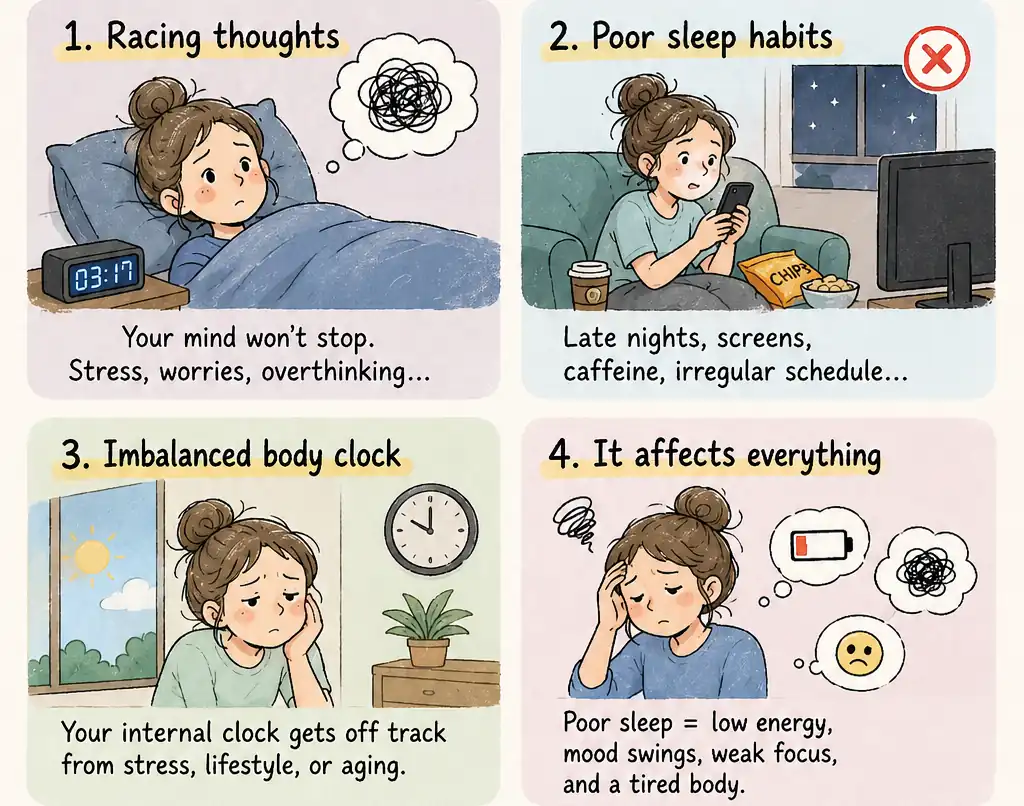
Even though your body feels completely exhausted, your mind reboots like a supercomputer, replaying past conversations or stressing about tomorrow’s tasks. This early cortisol surge is the exact reason why your brain lights up in the middle of the night.
Why High-Dose Melatonin Isn’t Enough for 3 AM Awakenings
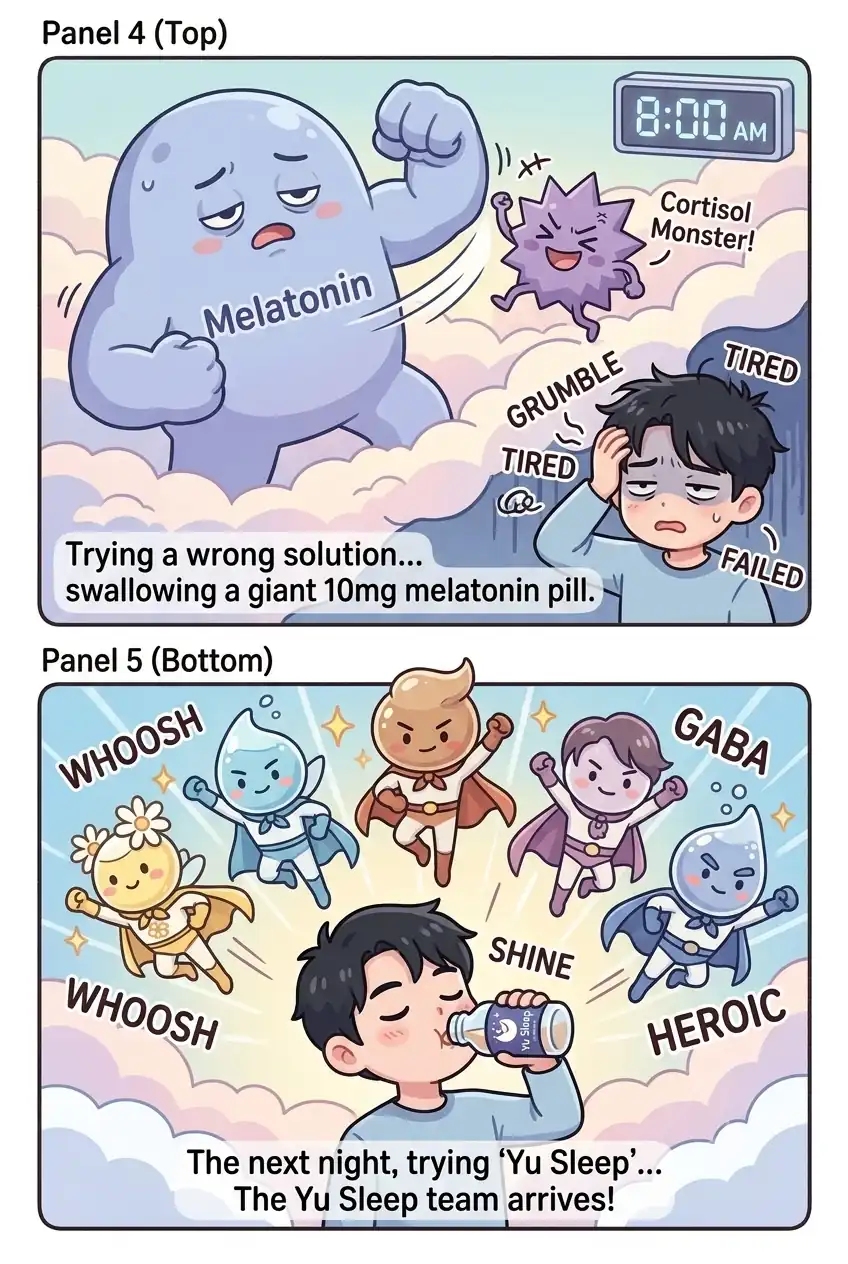
When struggling with sleep, the most common advice is to take melatonin supplements. However, many people discover that taking 5mg or 10mg of synthetic melatonin fails to keep them asleep through the night.
Melatonin Is Just an On-Switch: Melatonin simply signals to your brain that night has arrived. It does not stop early-morning cortisol surges or calm an overactive central nervous system. High doses can even overstimulate brain receptors, leaving you with daytime drowsiness or a “sleep hangover.”
Sleep Requires a Multi-Nutrient Strategy: Restorative sleep functions like an orchestra rather than a single on/off switch.
To restore complete night sleep and manage sleep maintenance insomnia effectively, you need a synergistic multi-nutrient approach (such as Yu Sleep) that targets multiple biological pathways at once:
- Low-Dose Melatonin (0.9mg): Gently signals nighttime without overwhelming brain receptors.
- L-Theanine & GABA: Acts as a brake on mental overactivity and quiets racing thoughts.
- Magnesium Glycinate: Highly absorbable nutrient that releases physical muscle tension and calms the nervous system.
- Lemon Balm & Tart Cherry Extract: Helps keep nighttime stress hormones and early cortisol spikes in check.
Reclaiming 8 Hours of Uninterrupted Sleep with Synergistic Sleep Support
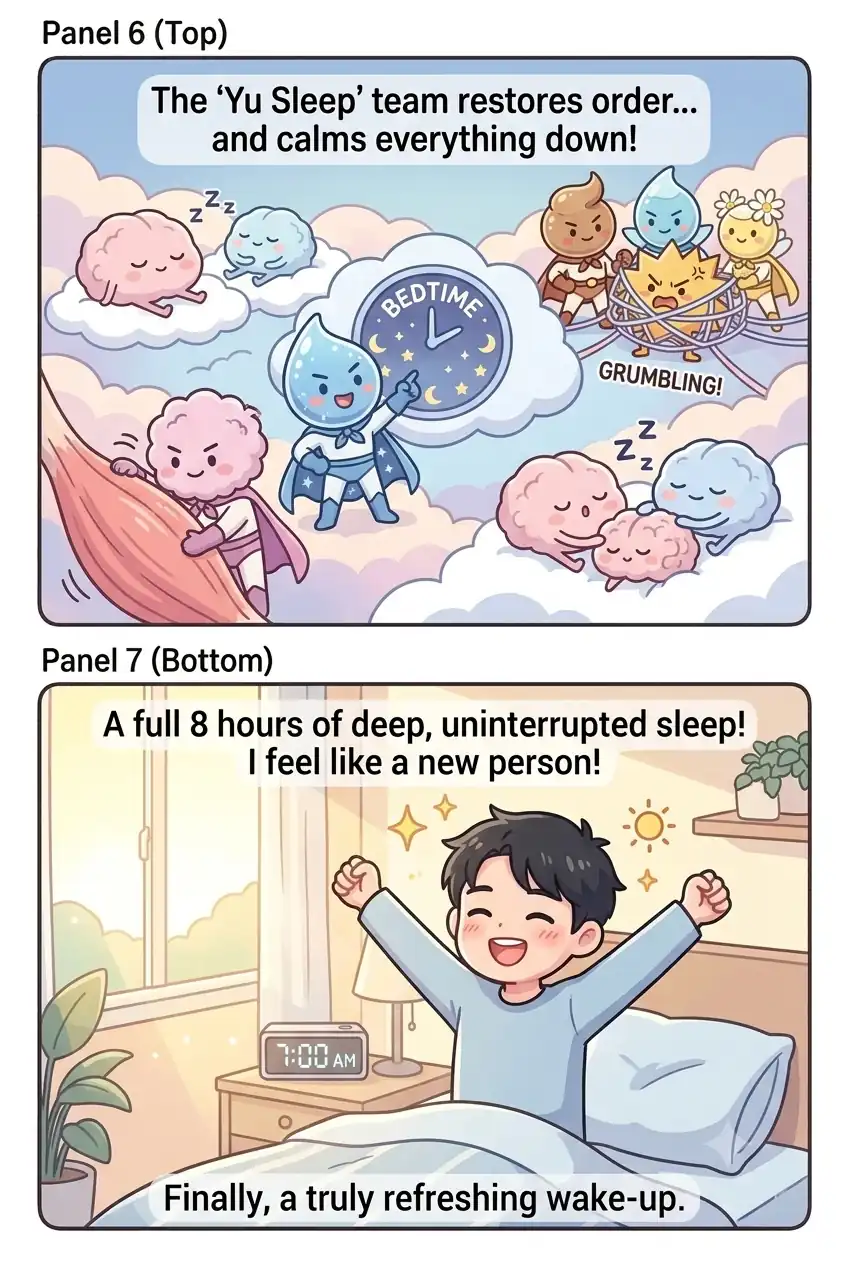
Instead of forcing your brain into unconsciousness with high-dose sedatives, supporting your body’s overall sleep architecture allows you to break the cycle of middle-of-the-night awakenings naturally.
- Calming Mental Noise: L-Theanine and GABA slow down hyperactive neurotransmitters, silencing looping thoughts before bed.
- Releasing Physical Tension: Magnesium relaxes tight muscles in your neck and shoulders, promoting physical readiness for deep rest.
- Blunting the Cortisol Alarm: Botanical extracts like lemon balm help blunt nocturnal cortisol spikes, allowing your brain to glide smoothly into the next sleep cycle without waking up.
Achieving deep, restorative sleep is the ultimate investment in your health.
Instead of searching for a single magic pill, support your body’s interconnected biological systems and look forward to waking up naturally refreshed every morning!
If you’re looking for a natural sleep aid focused on relaxation and overall sleep quality—not just falling asleep faster—it may be worth learning more.