








Understanding the Oral Microbiome and Why It Matters More Than Brushing Alone
📋 Table of Contents
- Beyond Brushing: What Researchers Discovered About the Oral Microbiome
- The Oral Microbiome as a Living Ecosystem
- How Imbalance in the Oral Microbiome Triggers Recurring Problems
- The Shift Toward Supporting Beneficial Bacteria
- Why Surface Cleaning Alone Rarely Restores the Oral Microbiome
- Looking Ahead: Natural Ways to Support Microbial Balance
Quick Summary (Key Takeaways)
- The Oral Microbiome Is Central: Chronic bleeding gums, recurring cavities, and persistent bad breath often stem from disruption in the oral microbiome rather than inadequate brushing.
- Ecosystem, Not Battlefield: Hundreds of bacterial species live in the mouth; health depends on balance, not total elimination of microbes.
- Beyond Surface Fixes: Daily hygiene removes plaque but does little to rebuild a resilient oral microbiome once it has shifted.
- Emerging Focus: Supporting beneficial bacteria is gaining attention as a more complete approach to long-term oral stability.
Beyond Brushing: What Researchers Discovered About the Oral Microbiome
When I finished writing the first part of this series, one question kept circling in my mind.
If so many people brush and floss consistently yet still face the same bleeding gums, new cavities, or stubborn bad breath, what are we missing?
I started reading recent papers on the oral microbiome—the dense community of microorganisms that live on teeth, gums, tongue, and the lining of the mouth. What I found changed how I view everyday dental care.
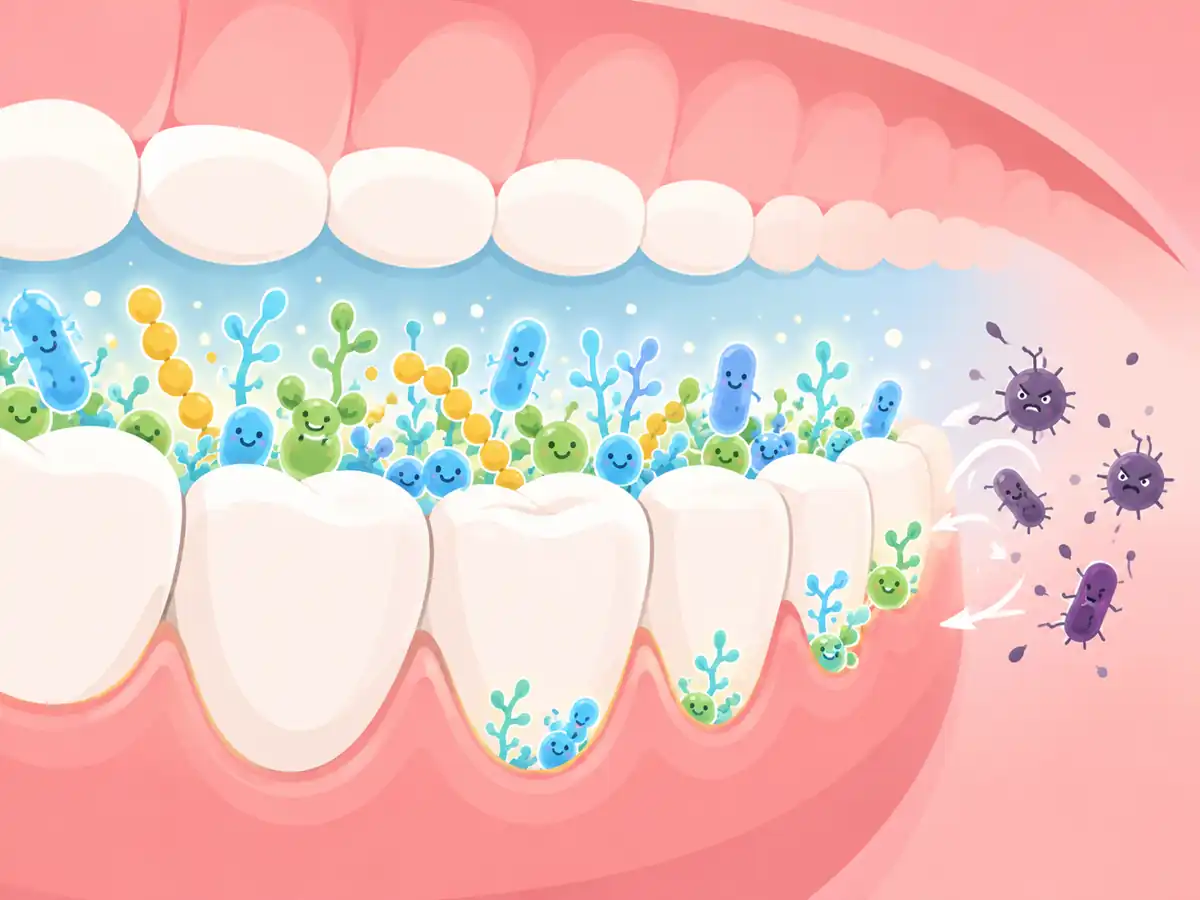
For decades the dominant message was simple: kill bacteria, remove plaque, prevent disease. That approach made sense on the surface. But the more I looked at the science, the clearer it became that the oral microbiome is not an enemy to be wiped out. It is a complex, living system that, when balanced, actively protects teeth and gums.
Oral Health Is More Than Clean Teeth had already hinted at this idea. Now the research made it concrete.
The Oral Microbiome as a Living Ecosystem
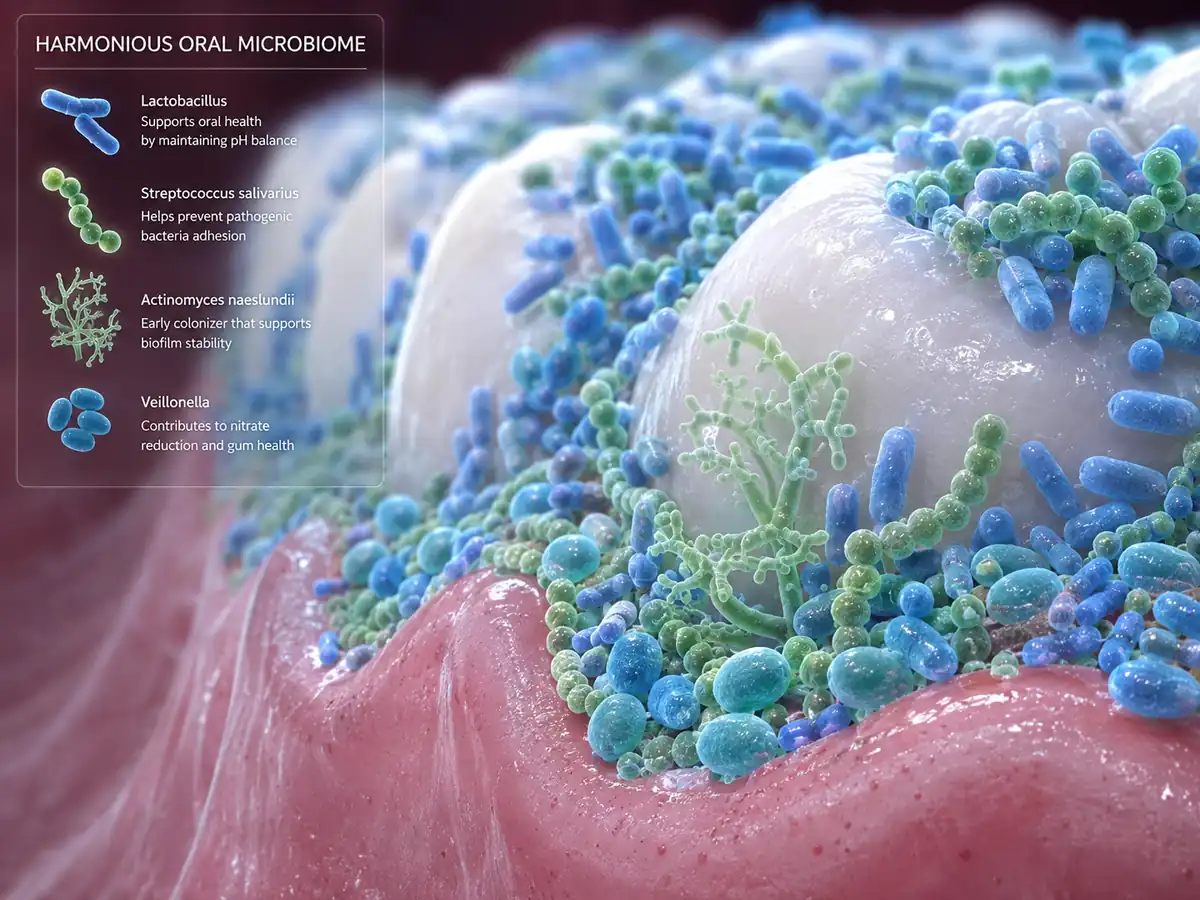
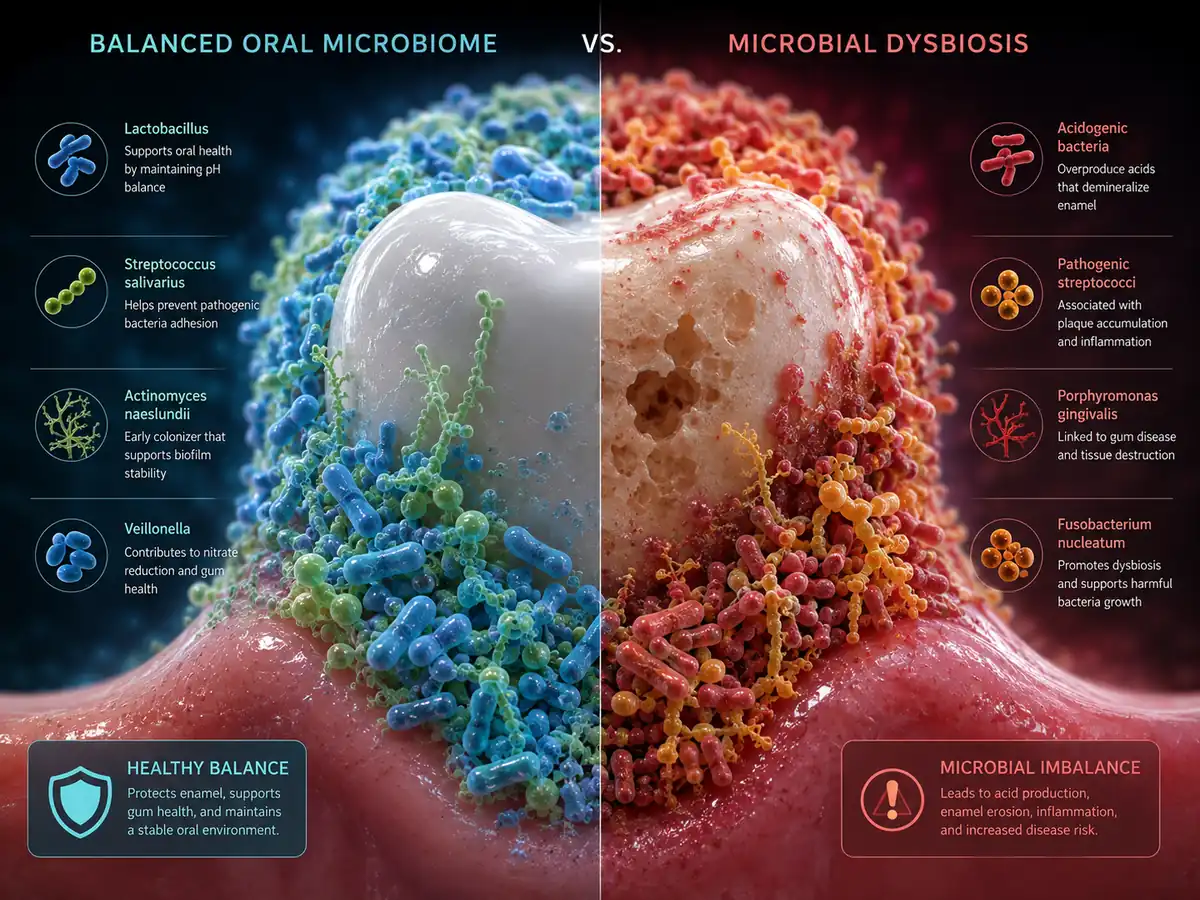
The mouth hosts hundreds of different bacterial species. Some produce acids that demineralize enamel. Others help neutralize those acids, support healthy gum tissue, or crowd out more aggressive strains.
A balanced oral microbiome keeps these populations in check. Saliva, minerals, and the physical presence of beneficial bacteria work together to maintain a stable environment. When that balance tips—through diet, dry mouth, certain medications, or repeated exposure to harsh antimicrobial products—the protective species decline and the more harmful ones gain ground.
I was struck by how often the literature returned to the same point: the state of the oral microbiome predicts far more about long-term dental outcomes than the frequency of brushing alone.
How Imbalance in the Oral Microbiome Triggers Recurring Problems
Once the oral microbiome shifts, several things tend to happen at once.
Acid-producing bacteria increase. Inflammation around the gums becomes harder to quiet. The natural remineralizing capacity of saliva is less effective. Bad breath compounds that healthy mouths keep in check begin to accumulate.
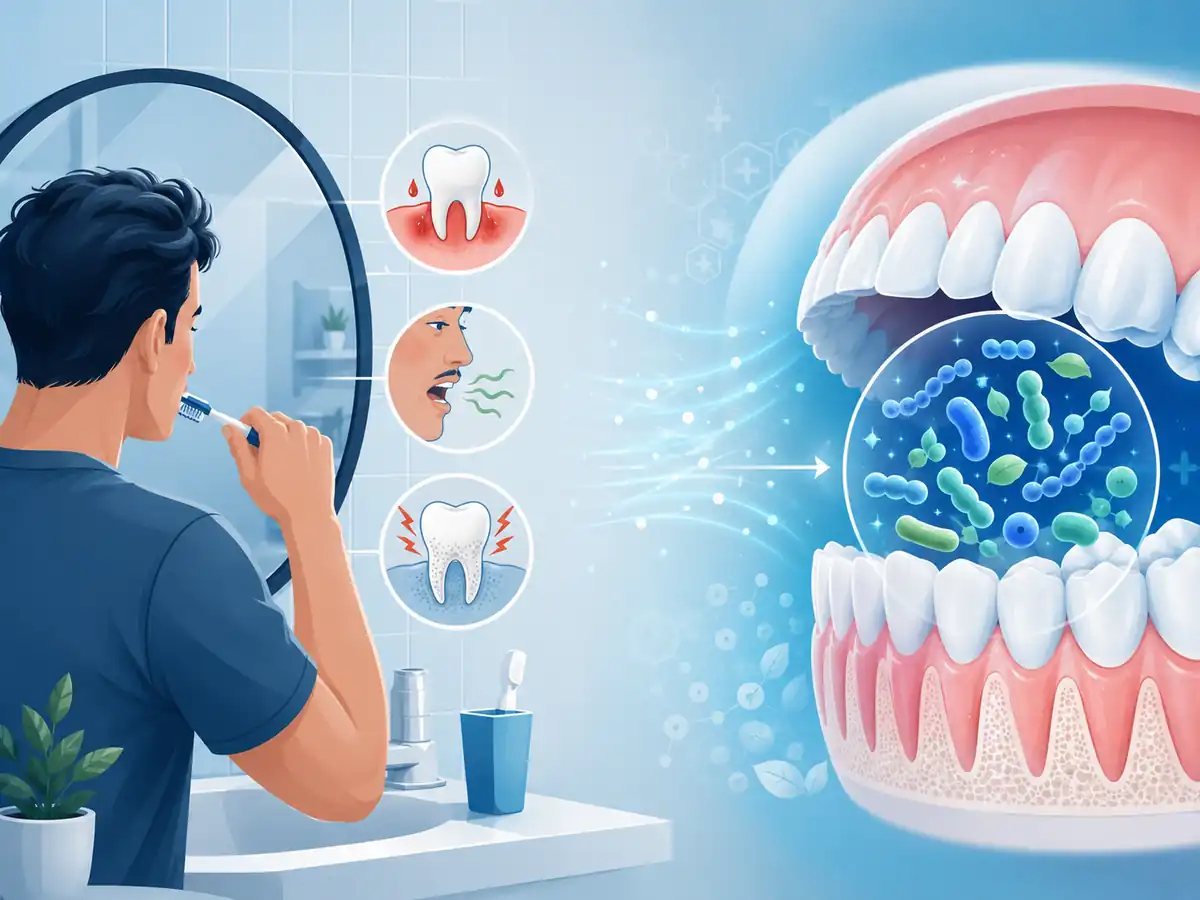
These changes do not usually appear overnight. They build gradually, which is why someone can follow a careful hygiene routine and still notice bleeding when they floss or sensitivity that never quite disappears. The surface looks clean, yet the underlying microbial community remains disrupted.
This pattern explained so many of the stories I had heard from friends and readers. The problem was not a lack of effort. It was an oral microbiome that had lost its equilibrium.
The Shift Toward Supporting Beneficial Bacteria
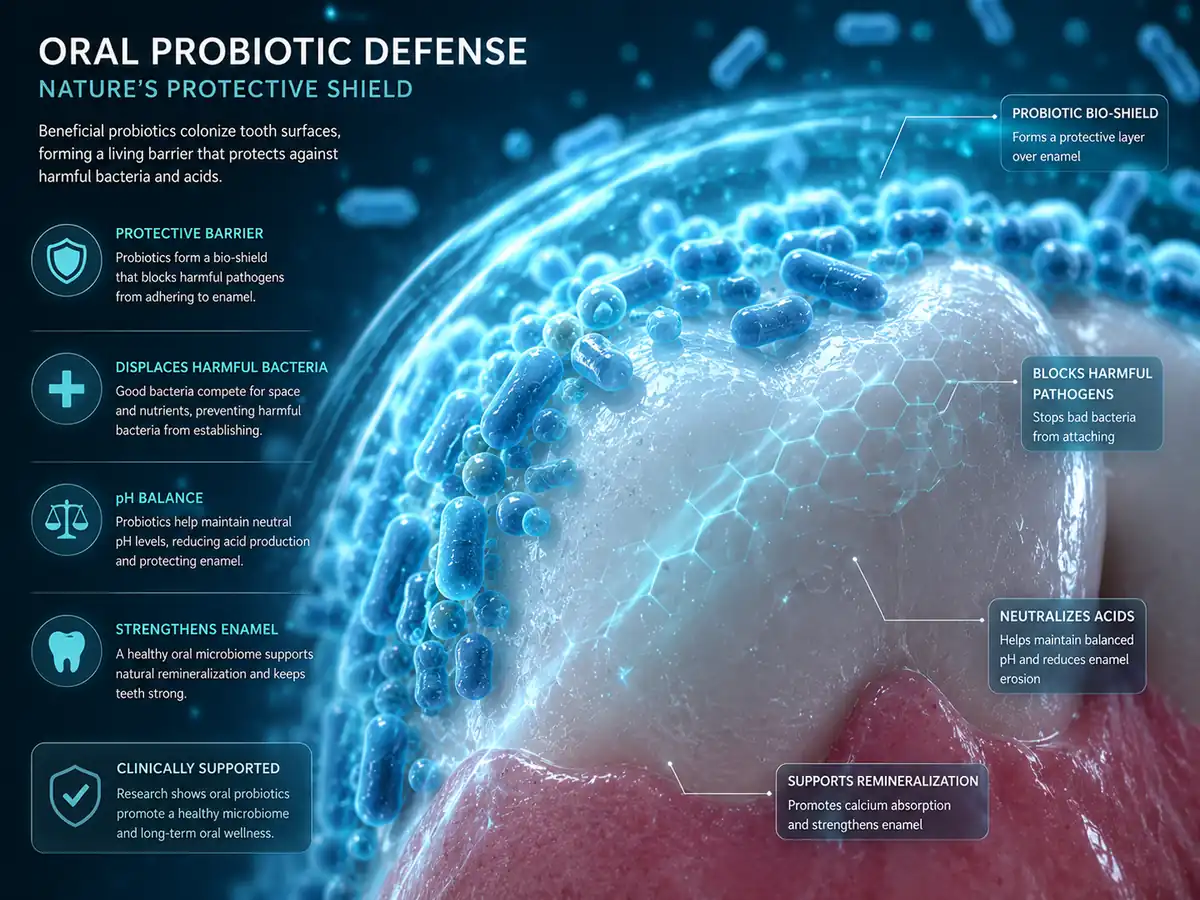
As I read further, a clear trend emerged in the research. Instead of focusing only on killing bacteria, more scientists are exploring ways to support the beneficial members of the oral microbiome.
Certain strains have been studied for their ability to help maintain gum health, limit the overgrowth of acid-producing species, and contribute to a more stable oral environment. The idea is not to introduce random bacteria, but to encourage the kinds of microbes that already belong in a healthy mouth.
This approach treats the oral microbiome as something that can be nurtured rather than constantly attacked. It also helps explain why some people experience temporary improvement with conventional products only to see the same issues return: the underlying community was never restored.
Why Surface Cleaning Alone Rarely Restores the Oral Microbiome
Brushing and flossing remain essential. They remove food debris and disrupt plaque biofilms. Yet they do not, by themselves, rebuild a depleted population of protective bacteria.
Harsh mouthwashes or aggressive antimicrobial ingredients can further reduce microbial diversity. In some cases they create an opening for the very species that contribute to decay and inflammation to rebound more strongly once the treatment stops.
Understanding this limitation helped me reframe the entire problem. Recurring oral health issues are often less about incomplete cleaning and more about an oral microbiome that has not been given the conditions it needs to recover.
Looking Ahead: Natural Ways to Support Microbial Balance
The more I learned about the oral microbiome, the more I wanted to understand the practical options that researchers and clinicians are examining.
Some approaches focus on introducing specific beneficial strains. Others emphasize postbiotic compounds or nutrients that help create a more favorable environment for protective bacteria to thrive. Both directions move beyond the simple “kill everything” model and toward restoring balance.
In the next part of this series I will look more closely at how these microbiome-support strategies work in practice, what the current evidence shows, and why many people are beginning to add them to their daily routines.
The oral microbiome is not a side detail in dental health. For a growing number of researchers, it is the central operating system. Once that system is understood, the recurring problems that once felt inevitable start to look far more manageable.
🌐 Reference Sites & Medical Authorities:
- Schlagenhauf U, Jockel-Schneider Y. Probiotics in the management of gingivitis and periodontitis. A review. Frontiers in Dental Medicine.2021: 2
- Daniells S. Probiotic lactobacillus paracasei shows oral health benefits: Study. nutraingredients.com. 2014, September 2
- Daniells S. Live or dead reuteri bacteria may offer oral health benefits: Study. nutraingredients-latam.com. 2019, December 12
- Invernici MM, Salvador SL, Silva PH, et al. Effects of Bifidobacterium probiotic on the treatment of chronic periodontitis: A randomized clinical trial. Journal of Clinical Periodontology. 2012;45(10):1198-1210