







Insomnia is more than simply being unable to fall asleep
📋 Table of Contents
Quick Summary (Key Takeaways)
- Beyond Sleep Deprivation: Chronic insomnia is often driven by anticipatory anxiety and fear of sleeplessness rather than just a physical inability to rest.
- Metabolic State During Rest: Even when sleeping, individuals with insomnia often experience lighter, less restorative sleep due to sustained physiological hyperarousal.
- Multifactorial Causes: Not all sleep struggles stem from stress—underlying issues like Delayed Sleep Phase Disorder (DSPD) highlight the role of internal biological clocks.
The Fear of Sleeplessness Behind Chronic Insomnia
Many people assume insomnia simply means not getting enough sleep. But what if the real problem isn’t the lack of sleep itself—it’s the fear of not sleeping?
That is exactly what this excellent TED-Ed video explores.
For most of us, an occasional sleepless night is normal. Stress at work, emotional worries, pain, travel, or even an unfamiliar environment can temporarily keep us awake. Once the situation improves, our sleep usually returns to normal.
How Stress and Biological Alertness Fuel Insomnia
Chronic insomnia is different.
Instead of responding to an external problem, the brain begins reacting to sleep itself. As bedtime approaches, anxiety grows. Thoughts like “What if I can’t sleep again tonight?” activate the body’s stress response, releasing hormones such as cortisol and adrenaline.
Rather than preparing the body for rest, the brain shifts into a state of heightened alertness, making sleep even more difficult.
This creates a frustrating cycle:
- Poor sleep increases anxiety.
- Anxiety increases biological alertness.
- Heightened alertness leads to another restless night.
Over time, even the bedroom itself can become associated with stress rather than relaxation. This vicious feedback loop is one of the primary drivers that sustain long-term insomnia.
Inside the Brain and Body During Sleepless Nights
One of the most interesting insights from the video is that insomnia isn’t simply about failing to fall asleep.
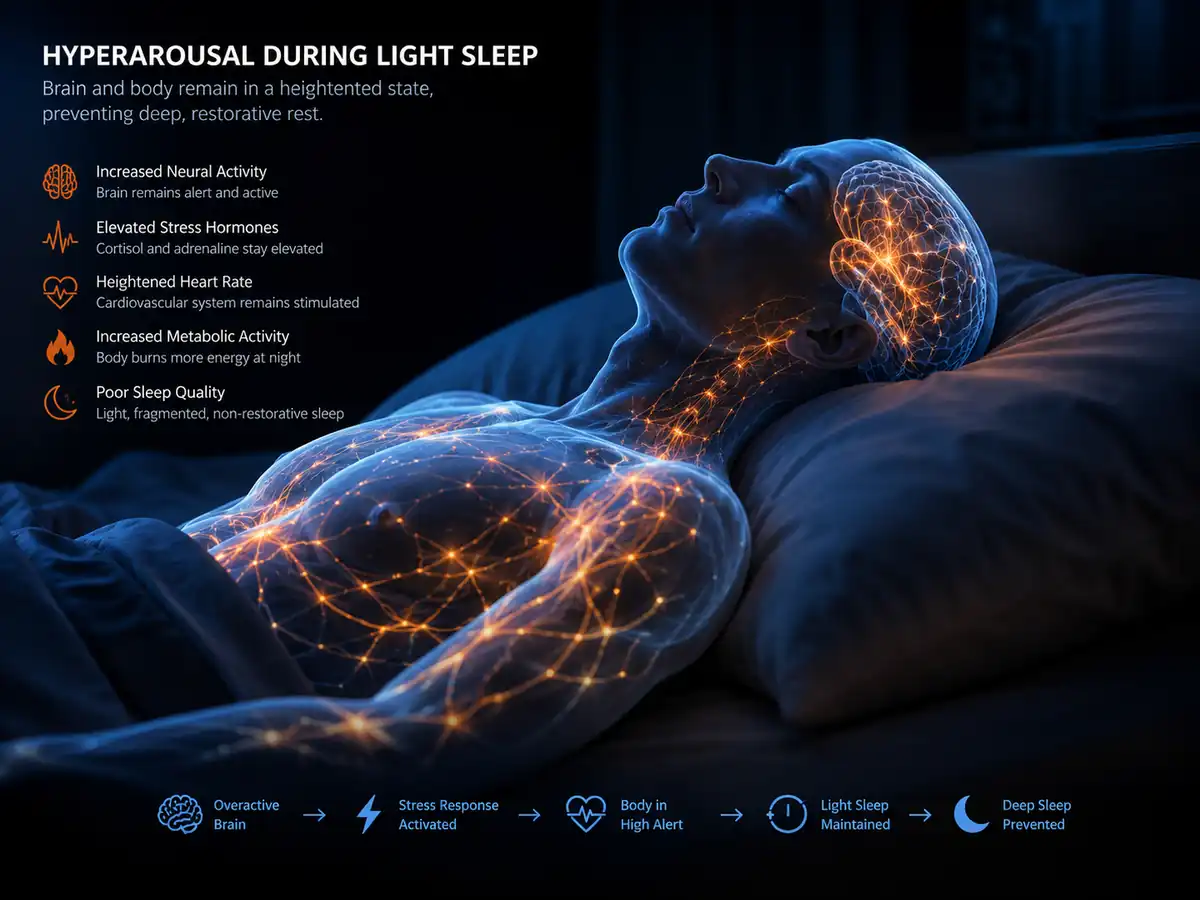
Even after falling asleep, people with chronic insomnia often experience lighter, less restorative sleep because their bodies remain metabolically active instead of fully relaxing. As a result, they wake up feeling exhausted despite spending enough hours in bed.
When the autonomic nervous system stays on high alert, the body continues consuming energy through the night, leading to persistent daytime fatigue.
Biological Clocks and Circadian Rhythm Disorders
The video also reminds us that not every sleep problem has the same cause.
While healthy sleep habits, stress management, and consistent routines help many people struggling with insomnia, some individuals actually have circadian rhythm disorders such as Delayed Sleep Phase Disorder (DSPD).
In these cases, the primary issue is not anxiety, but an internal biological clock that naturally runs later than average.
Breaking the Cycle and Restoring Natural Sleep
The biggest takeaway is simple: insomnia is rarely just a nighttime problem.
It is a complex interaction between the brain, stress hormones, daily habits, and our internal biological clock. Understanding how these factors perpetuate insomnia is often the vital first step toward breaking the cycle and restoring truly restful sleep.